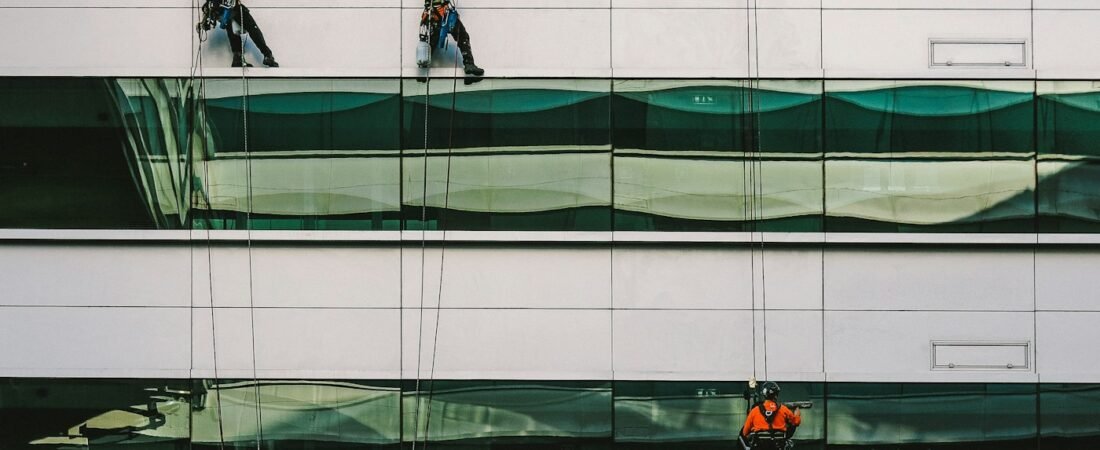

Why facade cleaning matters in Muscat’s climate
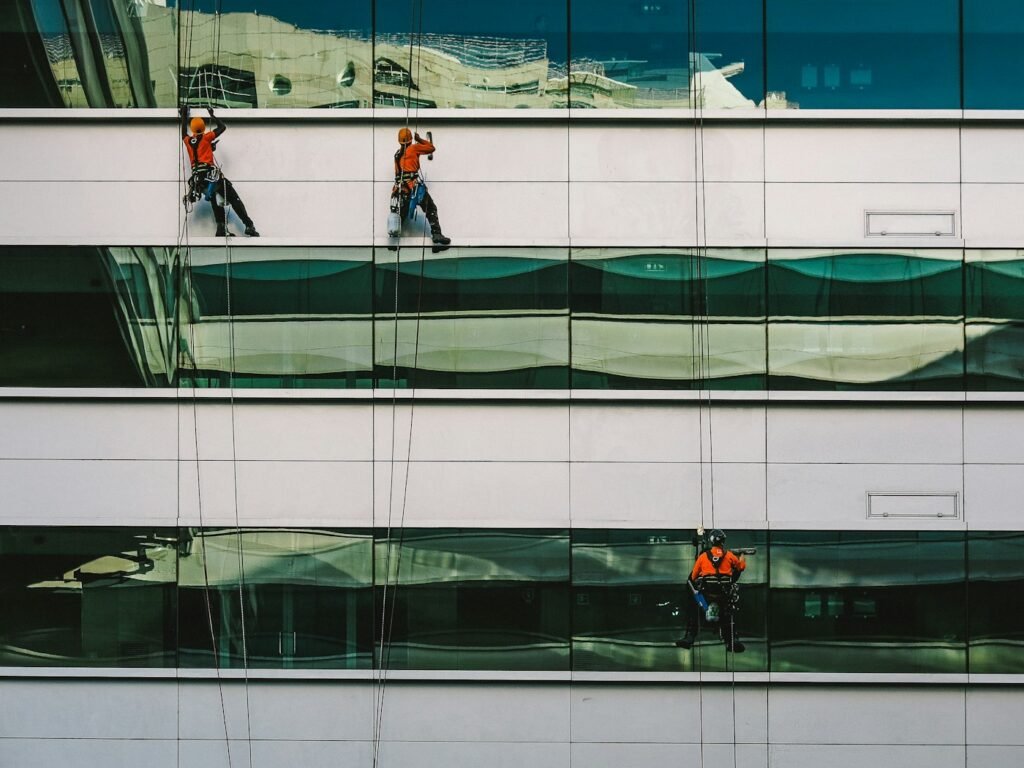
A building’s exterior is the first thing tenants, guests and customers see. In Oman, it’s also constantly exposed to conditions that dull and damage surfaces faster than in many other climates.
What Muscat’s climate does to building exteriors
- Dust and sand settle on glass and cladding, creating a dull film that bakes on in the heat.
- Humidity — particularly in summer — combines with dust to form stubborn streaks and staining.
- Coastal salt in sea air deposits on glass, aluminium and metal panels, and can contribute to corrosion over time.
The benefits of regular facade cleaning
- Protects surfaces: removing salt and grime helps prevent corrosion and premature wear on frames, seals and panels.
- Maintains appearance: clean glass and cladding keep the building looking well managed.
- Extends lifespan: well-maintained exterior materials last longer and need fewer repairs.
- Supports property value: presentation matters to tenants, buyers and hotel guests alike.
- More natural light: clean glazing lets more light into offices and apartments.
Which buildings benefit most?
Hotels, office buildings, malls, towers, residential blocks and industrial sites all benefit — especially those near the coast or busy roads, where exposure to salt and dust is higher.
How often should a facade be cleaned?
There’s no single answer. The right schedule depends on the building’s location, height, materials and how important presentation is to its use. A site assessment is the best way to agree a realistic, cost-effective schedule, and facade cleaning can be built into a wider maintenance contract.
Safety comes first
Exterior work at height must be planned carefully. Before any facade job, the access method, safety measures and scope should be agreed for the specific building — never improvised.
Learn more about our facade cleaning service, or request a site assessment for your building.
Plan your facade cleaning
Tell us about your building and we’ll arrange an assessment.